Address
304 North Cardinal St.
Dorchester Center, MA 02124
Work Hours
Monday to Friday: 7AM - 7PM
Weekend: 10AM - 5PM

Address
304 North Cardinal St.
Dorchester Center, MA 02124
Work Hours
Monday to Friday: 7AM - 7PM
Weekend: 10AM - 5PM

 Byadmin
Introduction: A gas spring is a mechanical device that serves multiple functions, such as providing support, cushioning, braking, height adjustment, and angle control. Due to its versatility, gas springs have found widespread application across various industries, including medical equipment, automotive manufacturing, furniture design, textile machinery, and processing industries. Depending on their specific features and areas of use, gas springs are also referred to as support rods, angle adjusters, gas struts, and dampers.
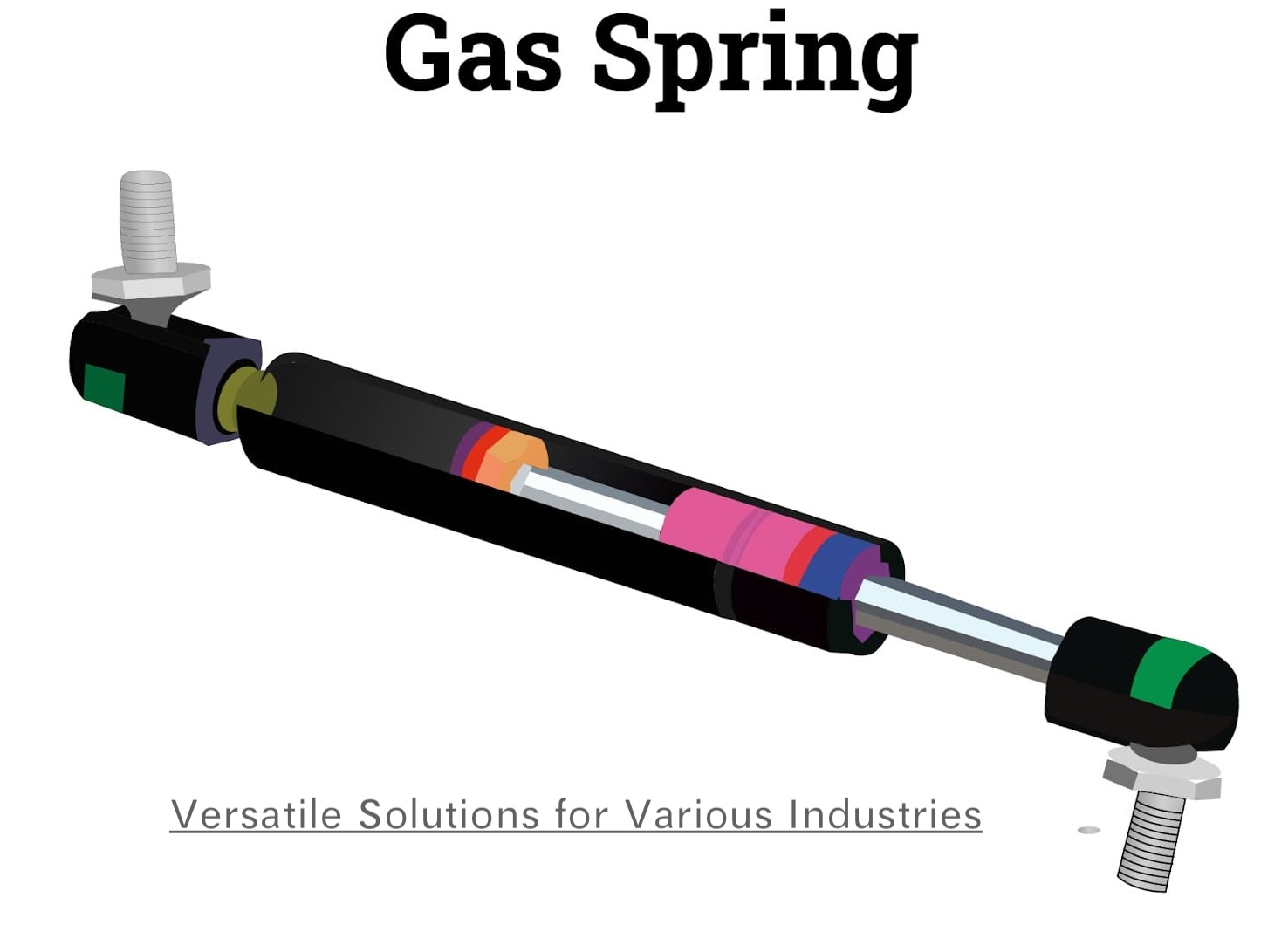
The fundamental working principle of a gas spring involves compressing inert gases and oils, or a mixture of both, within a sealed chamber. Based on their structure and functionality, gas springs can be categorized into different types, each tailored to suit particular applications and needs.
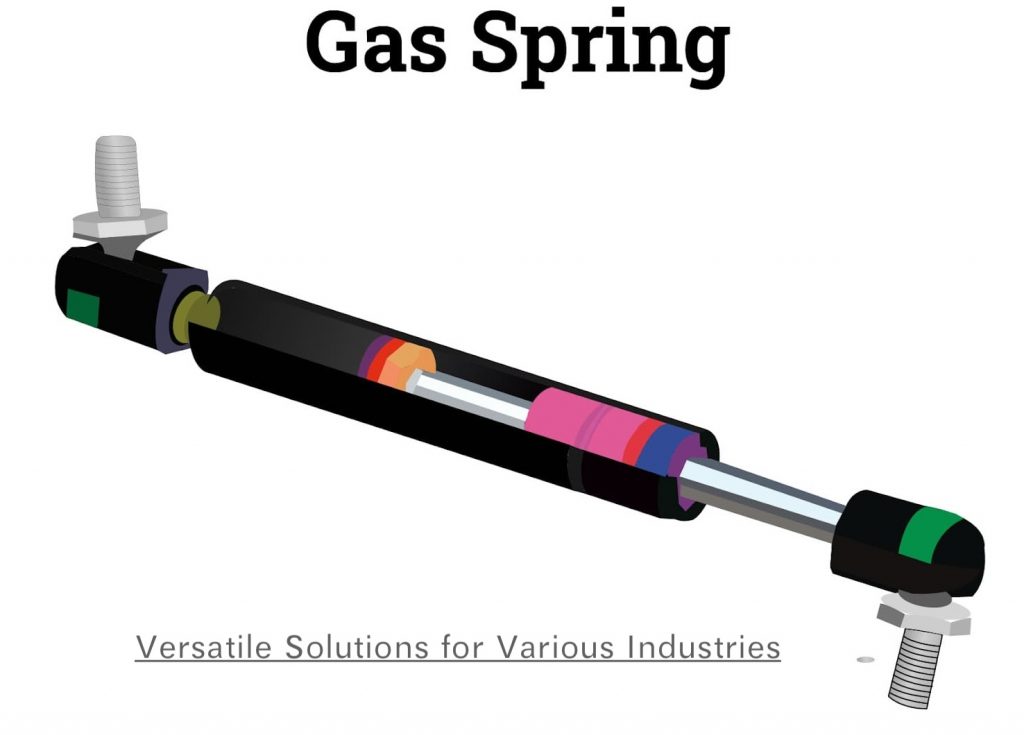
The standard or free-type gas spring is the most commonly used type. Its primary role is to provide support, and it operates between two fixed positions—fully extended and fully retracted. This type of gas spring cannot stop at any point within its travel range. It is widely used in industries such as automotive, textile machinery, printing equipment, office machinery, and construction machinery.
Key Features:
Applications:
The self-locking gas spring is predominantly used in applications where variable positioning is required, such as in medical equipment and seating systems. Equipped with a release mechanism, this type of gas spring can stop at any point along its travel range. Once locked, it can hold a significant load, with locking forces exceeding 5000N.
Key Features:
Applications:
A friction stay gas spring, also known as a multi-stop gas spring, is primarily utilized in kitchen furniture and medical devices. This type of gas spring is unique in that it can be stopped at any point without the need for an external locking mechanism, though it lacks the additional locking force present in self-locking models.
Key Features:
Applications:
Dampers are widely used in both the automotive and medical industries. Their primary function is to regulate the speed of movement by providing resistance that varies with velocity. As the speed of the connected component increases, the damper’s resistance also increases, offering greater control and damping effects. Dampers are mainly used for cushioning and controlling motion.
Key Features:
Applications:
Unlike conventional gas springs, which are fully extended in their free state and shorten under external force, traction gas springs are compressed when at rest and extend when subjected to pulling forces. This type of gas spring also comes in free-type, self-locking, and other variants, depending on its intended function.
Key Features:
Applications:
Gas springs are available in different materials, including standard steel and stainless steel. While standard steel gas springs are the most commonly used, stainless steel versions are designed for environments that demand high resistance to corrosion, such as food processing machinery, medical equipment, military applications, and high-temperature environments.
Applications for Stainless Steel Gas Springs:
Conclusion: Gas springs are essential components in a wide range of industries, offering precise control over motion, support, and damping. With various types available, including free-type, self-locking, friction stay, dampers, and traction gas springs, these devices can be customized to meet the specific needs of numerous applications. Additionally, the choice of materials, such as standard steel or stainless steel, ensures durability in demanding environments.